MISAWA AIR BASE, Japan -- The 35th Security Forces Squadron (SFS) conducted a joint bilateral Military Working Dog (MWD) expeditionary course with members of the Japan Air Self-Defense Force (JASDF) 3rd and 4th Air Wings, U.S. Army Veterinary Corps Misawa Air Base Veterinary Treatment Facility members, and 35th Civil Engineer Squadron (CES) Explosive Ordnance Disposal technicians at Misawa Air Base, Japan, April 6–9, 2026.
“Working with our U.S. partners is important because there’s so much to learn from them,” said JASDF Staff Sgt. Masaki Murakami, 3rd Air Wing security forces K-9 handler. “We’ve learned U.S. tactical aspects and methods for training guard dogs during this training.”
Throughout the training, teams integrated detection, patrol and response scenarios designed to challenge handlers and their canine partners while improving coordination between U.S. and Japanese forces. The exercise emphasized the exchange of tactics, techniques and procedures, strengthening combined force protection and reinforcing the enduring partnership between the two nations.
The collaboration between U.S. and Japanese K-9 teams highlighted the value of shared experience in a bilateral environment. As Misawa Air Base continues to serve as a hub for joint and combined operations, exercises like this ensure both forces remain adaptable, capable and ready to respond to evolving threats.
“This training is valuable because with downrange operations, especially for us, you never know what you’re going to encounter,” said U.S. Air Force Staff Sgt. Dante Sepulveda, 35th SFS MWD handler. “If an incident happens, it’s critical to be able to get yourself and your dog into cover and apply Tactical Combat Casualty Care (TCCC).”
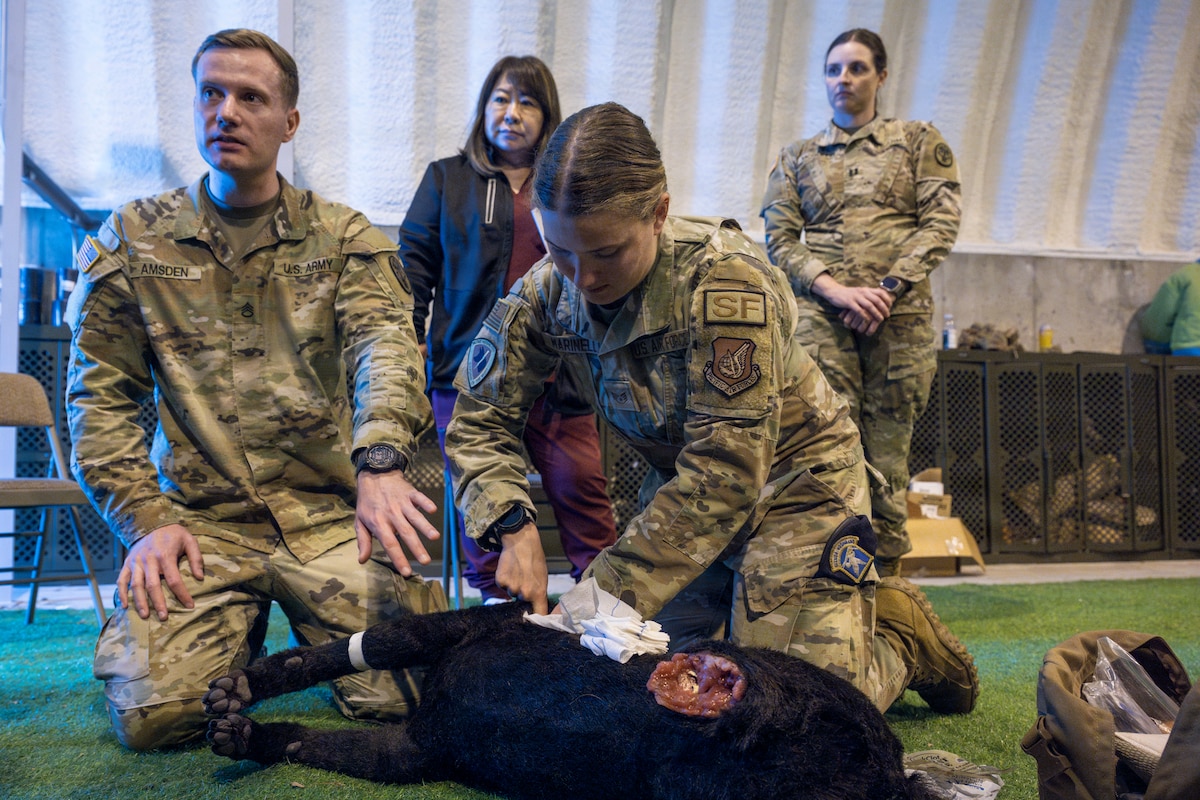
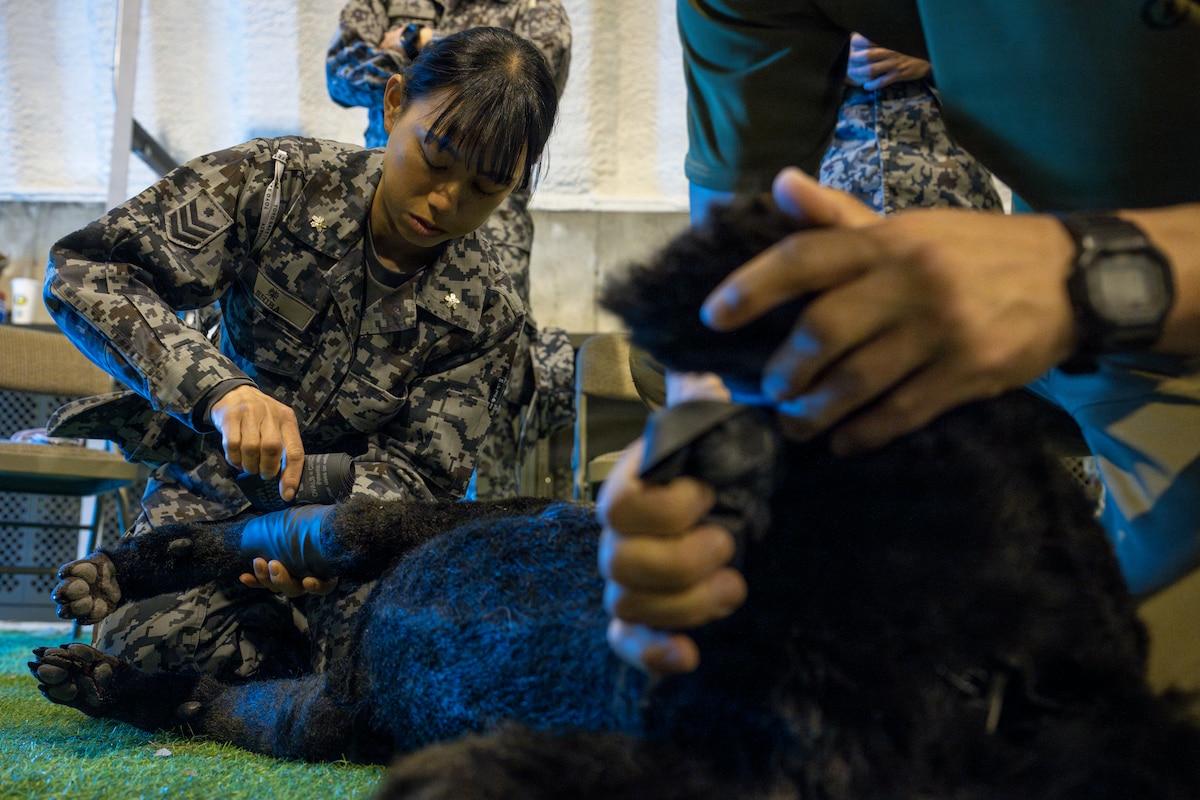
Army Veterinary Corps members brought their unique medical skills for TCCC training including hands-on practice using a canine training dummy. Participants learned how to place an IV, clear airway obstructions, apply a tourniquet and pack wounds.
“It’s important to know basic care and to truly know your dog. As a handler, if you don’t know how your dog reacts to certain situations, like gunfire,” Sepulveda added.”You can endanger the lives of your team, especially when you’re sweeping for explosives.”
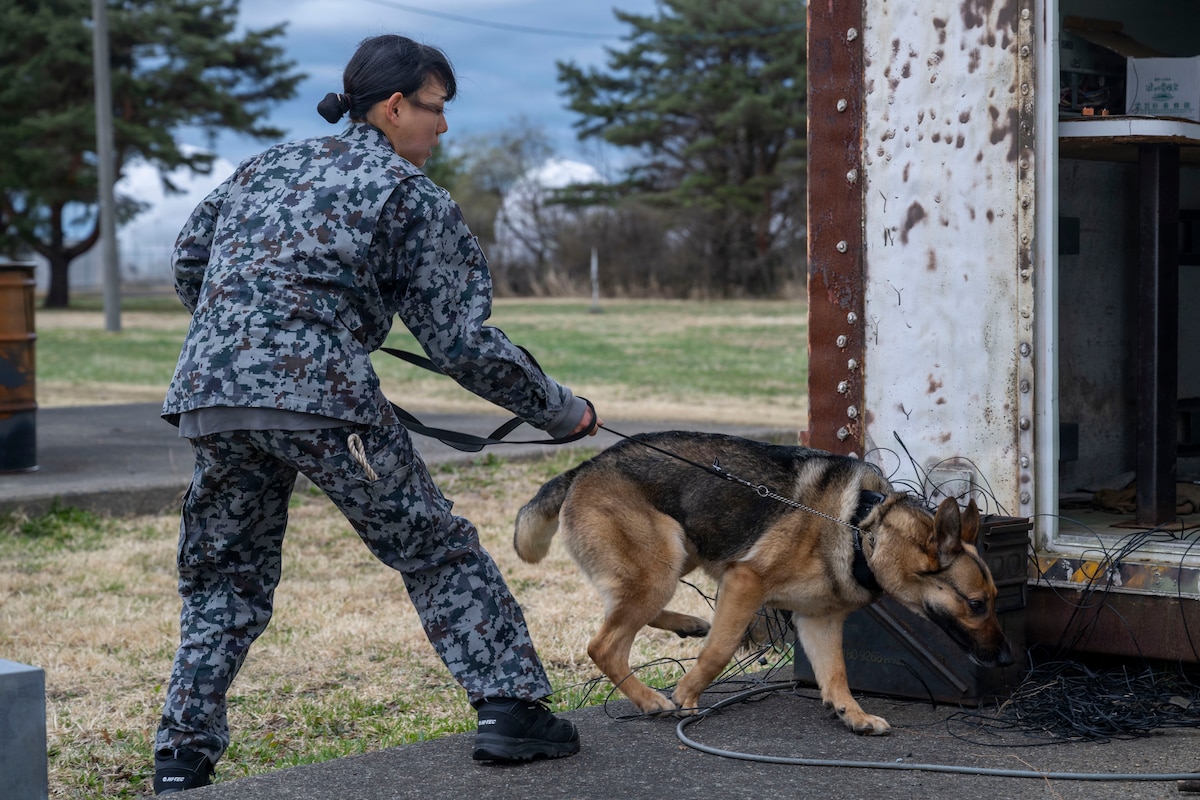
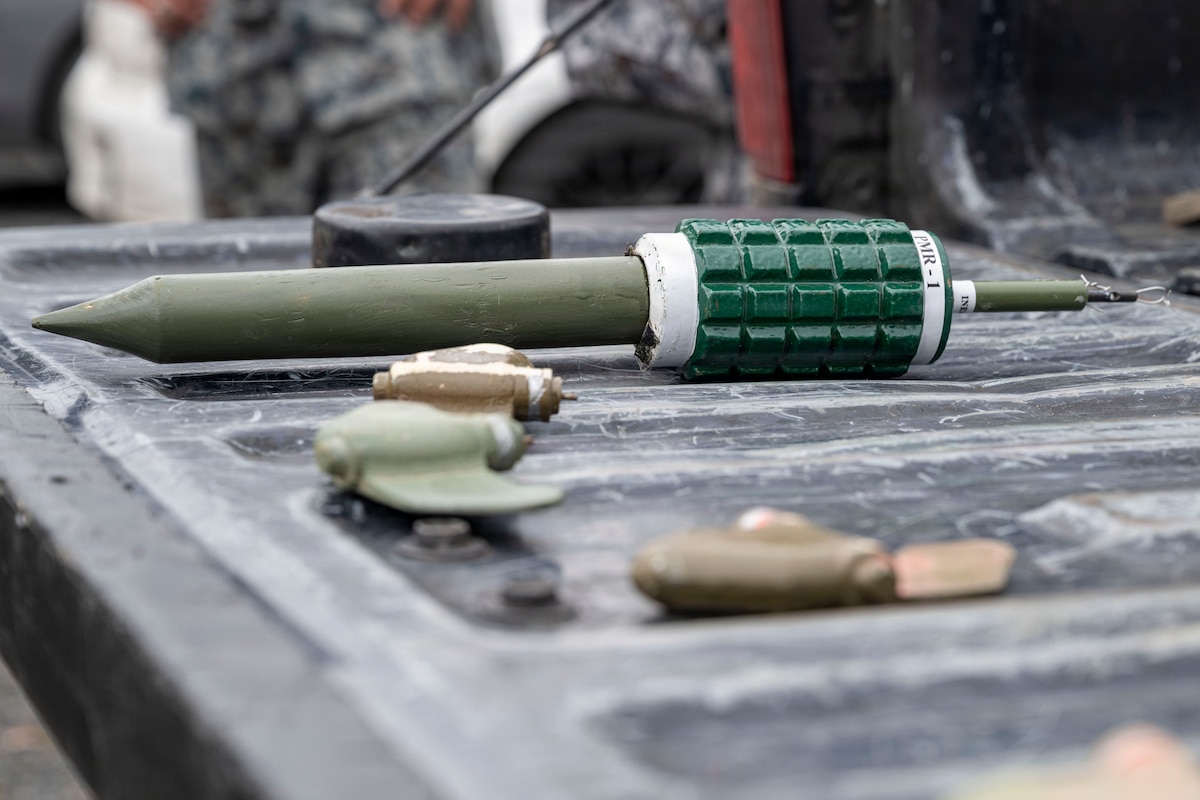
The MWD handlers also conducted building searches and dismounted patrols with simulated explosives placed by EOD technicians. They also utilized environmental conditioning, such as smoke grenades and firing blank ammunition, to ensure the canines remained focused during high intensity operations.
Working alongside JASDF K-9 partners, the training strengthened coordination between teams and reinforced their ability to execute the mission in high-stress environments. The exercise underscored the value of continued bilateral engagement at Misawa Air Base, ensuring both forces remain ready to defend the installation and contribute to stability in the Indo-Pacific region.
35th Security Forces Squadron conducts first joint bilateral K-9 exercise
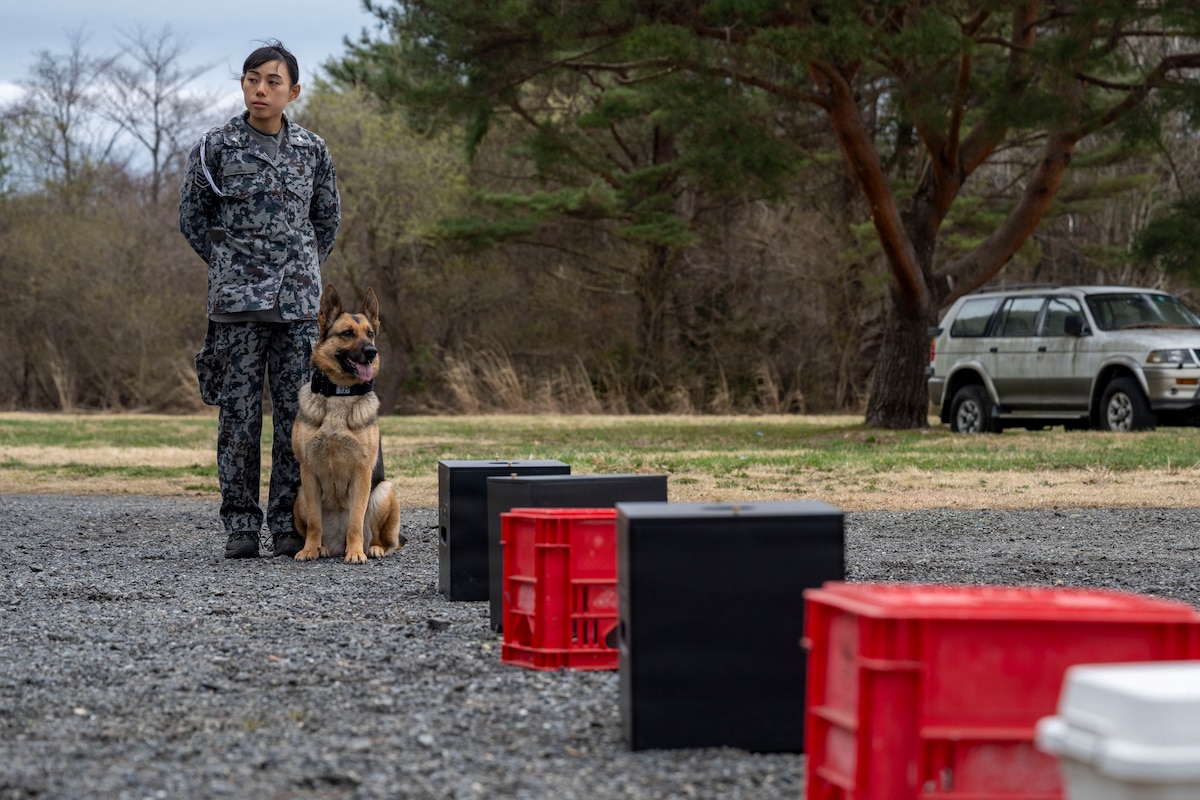
Japan Air Self-Defense Force Senior Airman Rin Shiba, security forces K-9 handler, and her military working dog participate in an explosives detection scenario during a joint bilateral K-9 exercise at Misawa Air Base, Japan, April 7, 2026. The exercise enhanced mission readiness by preparing handlers and their canine partners to conduct integrated defense in high-stress and contingency environments. (U.S. Air Force photo by Senior Airman Patrick Boyle)
1 of 6
35th Security Forces Squadron conducts first joint bilateral K-9 exercise
U.S. Army Staff Sgt. Derek Amsden, Army Veterinary Corps animal health specialist, and U.S. Air Force Staff Sgt. Amanda Marinelli, 35th Security Forces Squadron Military working dog handler, demonstrate canine tactical combat casualty care (TCCC) on a training mannequin during a joint bilateral K-9 exercise at Misawa Air Base, Japan, April 6, 2026. Canine trauma care training improved handlers’ ability to care for injured military working dogs during operations with U.S. and Japanese forces. (U.S. Air Force photo by Senior Airman Patrick Boyle)
2 of 6
35th Security Forces Squadron conducts first joint bilateral K-9 exercise
Japan Air Self-Defense Force Senior Airman Rin Shiba, security forces military working dog handler, applies a tourniquet to a canine training mannequin during a joint bilateral K-9 exercise at Misawa Air Base, Japan, April 6, 2026. Canine trauma care training improved handlers’ ability to care for injured military working dogs during operations with U.S. and Japanese forces. (U.S. Air Force photo by Senior Airman Patrick Boyle)
3 of 6
35th Security Forces Squadron conducts first joint bilateral K-9 exercise
Simulated explosives sit on display for participants to study during a joint bilateral K-9 exercise at Misawa Air Base, Japan, April 7, 2026. The event enhanced allied interoperability by familiarizing Japan Air Self-Defense Force handlers with U.S. military working dog procedures. (U.S. Air Force photo by Senior Airman Patrick Boyle)
4 of 6
35th Security Forces Squadron conducts first joint bilateral K-9 exercise
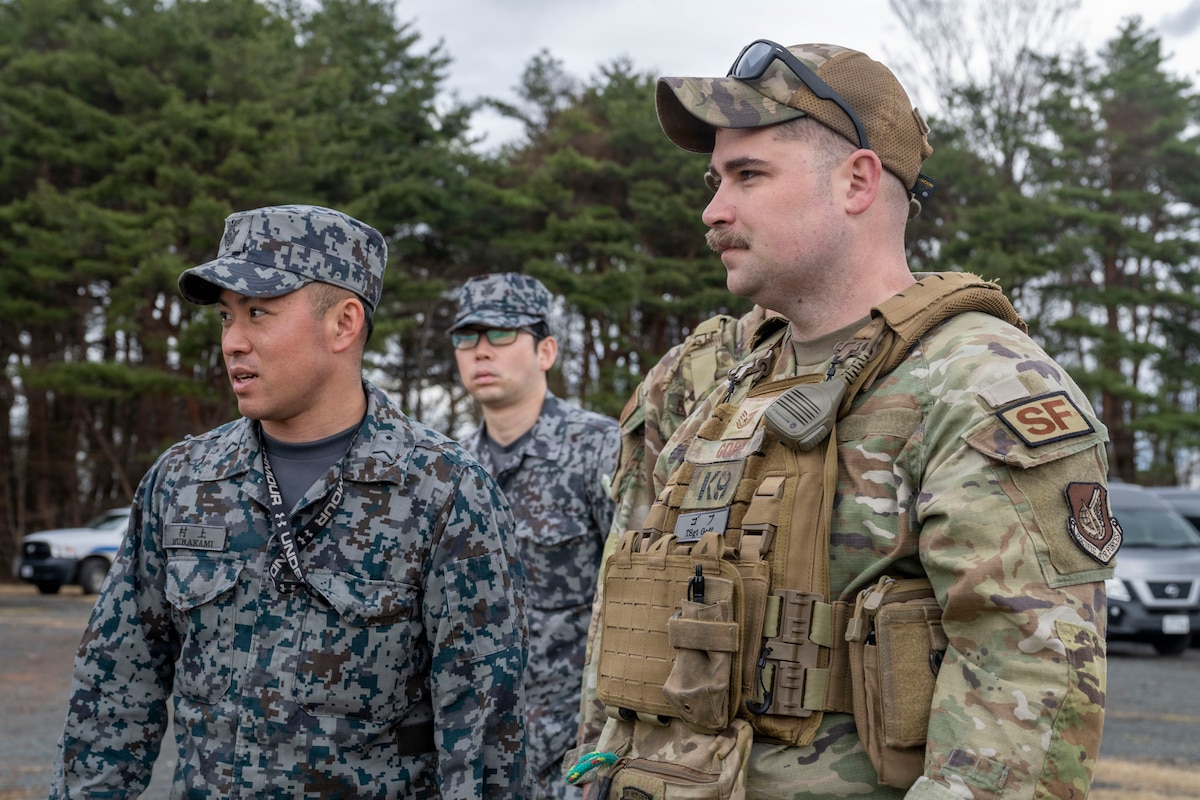
Japan Air Self-Defense Force (JASDF) Staff Sgt. Masaki Murakami, left, 3rd Air Wing security forces K-9 handler, JASDF Tech. Sgt. Daiki Saito, security forces K-9 handler, and U.S. Air Force Tech. Sgt. Steven Goff, 35th Security Forces Squadron military working dog handler, listen to a training scenario brief during a joint bilateral K-9 exercise at Misawa Air Base, Japan, April 7, 2026. The event enhanced allied interoperability by familiarizing JASDF handlers with U.S. military working dog procedures to strengthen combined security operations. (U.S. Air Force photo by Senior Airman Patrick Boyle)
5 of 6
35th Security Forces Squadron conducts first joint bilateral K-9 exercise
Japan Air Self-Defense Force Senior Airman Rin Shiba, security forces K-9 handler, and her military working dog train during a joint bilateral K-9 exercise at Misawa Air Base, Japan, April 7, 2026. The bilateral engagement reinforced a unified security posture at Misawa AB, enabling U.S. and Japanese forces to integrate rapidly during real-world contingencies. (U.S. Air Force photo by Senior Airman Patrick Boyle)
6 of 6